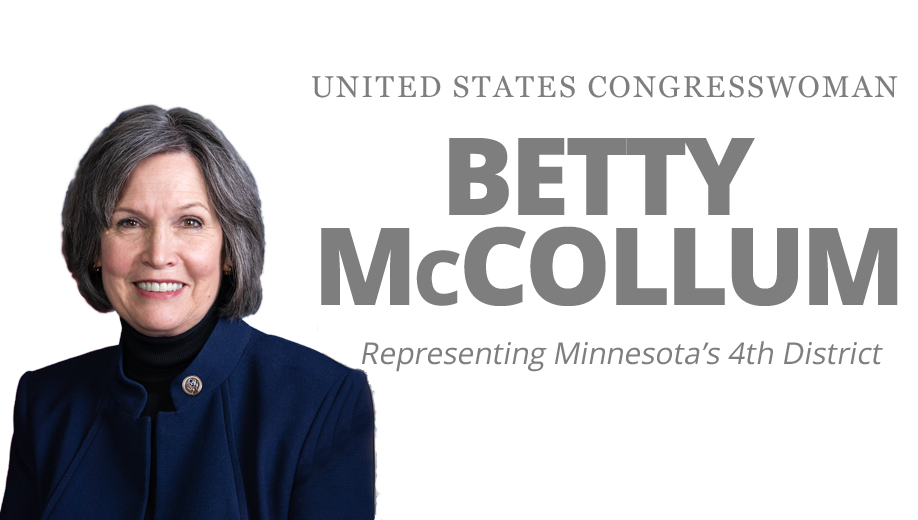
Statement on the National Defense Authorization Act for Fiscal Year 2026
Mr. Speaker, I rise in opposition to the National Defense Authorization Act for Fiscal Year 2026 (NDAA).
The National Defense Authorization Act is an important piece of annual legislation that governs the policies of the Department of Defense and authorizes our common defense. It is deeply unfortunate that Congress considers this year’s NDAA amongst a steady stream of alarming misuses of the U.S. Armed Forces by President Trump. While in office, the President has issued unlawful orders, directed unlawful deployments, and has unlawfully misused Congressionally appropriated funds. President Trump has chronically abused his executive authority as Commander in Chief, and I do not believe that Members of Congress can divorce our consideration of this NDAA from the context of his actions in the Oval Office. Let me provide just a few examples.
First, President Trump has ordered the U.S. military to strike maritime vessels in the Western Hemisphere that the Trump administration claims are carrying narcotics. These military activities in the Caribbean have not been authorized by Congress, and the administration has deliberately withheld information from Congress on the nature of these strikes. I believe these to be extrajudicial killings and they should end immediately. These strikes are occurring amongst a large-scale military buildup in the Caribbean, the goals of which have also not been adequately explained to Congress.
Second, the President has circumvented the authority of several state governors and federalized the National Guard for the purposes of deploying them in support of domestic law enforcement activities. Domestic policing is not among the National Guard’s core missions, and the Posse Comitatus Act of 1878 prohibits the President from deploying the U.S. military for domestic law enforcement missions unless the Insurrection Act of 1807 has been invoked, which President Trump has not done. These unlawful deployments are a serious misuse of the National Guard for political purposes by President Trump and they should end.
Finally, President Trump’s Office of Management and Budget (OMB) repeatedly violated Article 1 of the Constitution and appropriations law. OMB has frequently directed the Department of Defense to withhold funding to authorized programs against Congressional intention and direction. During the longest federal government shutdown in history, OMB directed the Department to unlawfully use money appropriated for national security research and development projects to pay military personnel. I support paying our troops in the event of a shutdown, but the way OMB and the Department moved this funding was not legal.
These are just three examples in a very long list, but the fact is that President Trump has a record of chronic unlawful misuse of our military and national security assets. This is dangerous to our national security, the future of our democracy, and this behavior is directly relevant to whether Congress should endorse an NDAA that, in my opinion, does not do nearly enough to reign in an Administration that is increasingly out of control. Let me lay out several of my concerns with this legislation.
First, this NDAA authorizes $890 billion in funding for the Department of Defense, National Nuclear Security Agency, and other national security agencies. This is approximately $8 billion above what the President requested in his Fiscal Year 2026 Budget for national security agencies. Additionally, the Trump administration received $156 billion in new mandatory defense funding through the Republican reconciliation bill. I voted against providing the Administration with that funding, and I believe it will give them too much flexibility in supporting a broad range of the Administration’s national security priorities. However, Congress has yet to receive a final spend plan from the Department that accounts for the full amount of that funding. Given the broad increase in defense funding provided through reconciliation, and my previously stated concerns about OMB’s unlawful approach to appropriations law, I do not believe that Congress should authorize additional defense funding in the NDAA above the budget request.
Second, I am concerned that this NDAA will enable the Trump administration’s continued misuse of the National Guard and active-duty military for domestic law enforcement purposes. The bill codifies portions of several of President Trump’s executive orders regarding U.S. military activity on the Southern Border, including the administration’s establishment of new National Defense Areas. It does not provide clear statutory limits on the use of lethal military force on U.S. soil, including narrow definitions of pressing circumstances, judicial oversight where practical, immediate Congressional notification, and independent after-action review. This NDAA needed to provide clear limits on the President’s border operations including sunset provisions and reauthorization requirements. It fails to do so. The NDAA also provides no restriction on the increasingly routine federal use of the National Guard and active-duty forces. At the very least, it should limit any domestic support in policing to requests by the governors or narrowly tailored, time-limited federal authorizations with mandatory training and Congressional reporting requirements
Third, while this NDAA repeals the 1991 and 2002 Authorizations for Use of Military Force (AUMF) related to U.S. military actions in Iraq, the bill does not repeal the 2001 AUMF that was passed following the terrorist attacks September 11, 2001. I have long supported a repeal of the 2001 AUMF because it was intended to authorize military action against Al-Qaeda in Afghanistan, a mission that has long since ended. The legal authorities provided in the 2001 AUMF are now being twisted by the Trump administration to justify military strikes in the Western Hemisphere on drug traffickers, who are international criminals, but that the Administration has defined as “terrorists.” As I stated previously, I believe this to be unlawful. These actions are dangerous mission creep that I fear may lead to another catastrophic war of regime change in Venezuela. If the Trump administration needs new legal authorities to conduct strikes on terrorist groups in the Middle East, then they should seek new authorization from Congress. If they feel that military action in the Western Hemisphere is a national security priority, then they should seek authorization from Congress as well and let the representatives of the people decide as our Constitution states.
Fourth, this bill continues to embrace the Trump administration’s culture war attacks on Diversity, Equity, Inclusion and Accessibility programs that undermine recruitment, retention and unit cohesion. Americans have watched President Trump turn the Defense Department into an ideological battleground for imposing a right-wing ideology that politicizes personnel policy and damages the readiness of all our service members. While this conferenced version of the NDAA does not include all the culture war related provisions from House version, it does retain some. That includes a provision prohibiting transgender Americans from participating in sports at the U.S. service academies, which is an unnecessary attack on transgender Americans who are already prevented from serving in the military by President Trump. Republicans must stop injecting partisan politics into the NDAA because these provisions promote only division and will continue to discourage Americans from serving our nation.
Fifth, this NDAA authorizes expanded military cooperation between the United States and Israel that, considering the Israeli military campaign in Gaza that has killed approximately 70,000 Palestinians, I do not support. To be clear, I have always supported and continue to support cooperative missile defense programs like Iron Dome because I believe that no child – Israeli or Palestinian – deserves to have missiles fall on their heads. However, this NDAA goes beyond support for missile defense and includes provisions that strengthen the defense production relationship and technology sharing, including unmanned systems, between the United States and Israel. As a strong critic of Prime Minister Netanyahu, I am appalled at the way he has prosecuted the Israeli military campaign against Hamas terrorists that has led to catastrophic death and destruct in Gaza. With a fragile ceasefire in place, we should be focused on ensuring the continuation of a peace process that ends the war for good, not expanding our military cooperation with Prime Minister Netanyahu’s government.
Finally, this NDAA contains a provision that allows the Department of Defense and the Services to move funds between several different accounts of appropriated funds including the:
Military Construction, Operations and Maintenance, and Research, Development, Test, and Evaluation accounts, without seeking approval from Congress. I understand that the intent is to expedite the construction of the new headquarters for U.S. Space Command, but the authority provided by this provision is broad, permanent, and will likely be used beyond this one instance. The Appropriations Committee meticulously considers how funds from these accounts are to be used, and this authority offers too much room for abuse by the Administration. Given OMB and the Department’s repeated abuse of appropriations law this year, the idea of providing the Department with new authority to move funds absent Congressional approval should be a non-starter for the Appropriations Committee. This provision must be rescinded in the Defense Appropriations Act.
As the Ranking Member of the House Appropriations Subcommittee on Defense, I completely agree that the United States must maintain a strong military force that can deter wars and win them if necessary. I appreciate the work that has been done by my Democratic colleagues on the Armed Services Committee to improve this bill. They have worked hard and I will have a similarly difficult task in negotiating the conference agreement for the Fiscal Year 2026 Defense Appropriations Act. My colleagues have given their best efforts and put forward a product that attempts major reforms to a clearly broken defense acquisition process, many of which I support. But America must be both strong and principled, and the National Defense Authorization Act must reflect that spirit. We can modernize our forces and protect our homeland without eroding the Constitutional safeguards that make our democracy worth defending. It is with deep regret that, in my opinion, this bill does not do enough to meet that standard.
I oppose this legislation and I urge my colleagues to do the same. Mr. Speaker, I yield back.